FEDERATION
for all marketing association in Asia.
Originally founded in 1991 as Asia Pacific Marketing Federation (APMF).
It evolved into AMF in 2007.
34 YEARS OF COLLABORATION
asia marketing federation

When the Indonesia Marketing Association (IMA) began to be active again in the Asia Pacific Marketing Federation (APMF) in 1996, it was immediately busy as the host of the APMF event in Bali a few months later. At that time, economic conditions in Asia were moving up along with implementing the Flying Geese principle in regional economic development. So, of course, optimism is strong among the National Marketing Associations (NMAs), which are members of APMF.
The crisis that hit parts of Asia in mid-1997 came as a shock to the countries affected. They never imagined there would be such a crisis. So there is no anticipation.
Indonesia is a country that was later affected by the Asian crisis that emerged in mid-1997. In May 1998, racial riots occurred, which later developed into a multidimensional crisis. But I was reminded by one of Indonesia's business leaders, who have a global network, Mochtar Riady, who stated that the crisis in Mandarin was Wei Ji, Threats and Opportunities.
Due to the multidimensional crisis, the Indonesian currency fell drastically in value. So when traveling abroad, the costs that must be incurred are many times higher than before the Asian crisis. But after Indonesia experienced a multidimensional crisis, I actually received an invitation to Russia to present my model in the insertion of Warren J. Keegan's book Global Marketing Management and will talk with Philip Kotler.
I decided to go to Russia. I remember that the late JJ Roses from the Philippine Marketing Association also left for Russia. Incidentally, the Philippines was not badly affected by the Asian crisis at that time, as happened in Indonesia, South Korea, and Thailand.
As I have told many times later, in Russia, it was an opportunity for me to have a one-on-one talk with Philip Kotler and to start a long partnership until now, starting with the writing of the book Repositioning Asia. What about APMF? The crisis that occurred from 1997 to 1998 prompted me to propose the establishment of the APMF Foundation, derived from the unused contributions of AMF members, even though Indonesia and IMA were not in good financial condition at that time.
After the 1997-1998 Asian crisis, Asian countries had even better economic conditions. So I also thought about repositioning APMF to become an Asia-based organization, from what was once broad to Australia and Canada. The momentum for the change of APMF to become the Asia Marketing Federation (AMF) was then realized when Philip Kotler visited Jakarta in 2007 to coincide with the 40th anniversary of ASEAN.
Since 2007, AMF has grown rapidly, both in terms of the number of NMAs and activities. Whereas from 2007 to 2022, there were many big changes in the world. From the global financial crisis in 2008, the disruption triggered by the rapid emergence of various technology companies from 2010 to 2019, to the COVID-19 pandemic and the war in Ukraine.
What does it mean? In 1998, I included a crisis perspective by referring to crisis writings according to the Chinese Wei Ji script, 4C's analysis, and PDB in the Repositioning Asia book, so since 2020, I have introduced the concept of Entrepreneurial Marketing, which has the core concept of Creativity, Innovation, Entrepreneurship. and Leadership (CIEL). The concept will be the tenth book with Philip Kotler and also co-written by Hooi Den Huan and Jacky Mussry.
If the 4C's analysis and PDB are adopted by companies and institutions and applied to reposition APMF to AMF, what about the Entrepreneurial Marketing concept? By looking at the various creativity and innovations that have emerged since 2020, such as Asia Marketing Day and the publication of The AMF Journal, I believe that AMF is in the process of becoming an implementer of Entrepreneurial Marketing concept. The process will be even better if the NMAs, which are members of AMF, also become the implementers of Entrepreneurial Marketing concept.
It is a tremendous honor to assume the presidency of the Asia Marketing Federation (AMF). I want to begin by recognizing the remarkable journey that has brought us here.
Founded in 1991 with a vision to foster cooperation, share knowledge, and advance marketing across Asia, AMF has grown from a small yet determined organization into a dynamic collaborative platform for national marketing associations. Today, AMF represents the diverse and vibrant marketing landscape across the region. This success is a testament to the visionary leadership of our founder, Mr. Hermawan Kartajaya, who united marketers across Asia to build a community grounded in shared goals and aspirations.
As I step into this role, my vision is to lead, inspire, innovate, and engage globally. Together, we will elevate AMF as a leading force in the global marketing landscape by focusing on four strategic pillars: Global Partnerships and Collaboration, Strategic Leadership and Standards, Knowledge and Talent Development, and Innovation and Sustainability.
1. Engage Globally through Partnerships and Collaboration
To fulfill AMF’s vision of expanding from Asia to the world, we will establish robust collaboration mechanisms with the Asia Marketing Council (AMC) and the European Marketing Confederation (EMC) to build the World Marketing Council (WMC). Through these partnerships, we will strengthen our global network and facilitate cross-regional collaboration.
Additionally, AMF will actively engage with international organizations such as ISO, promoting global connections and advancing international marketing standards. Notably, we aim to establish ISO technical committees on digital marketing and contact centers, positioning AMF as a pivotal player in shaping global marketing standards. These initiatives align with our mission to achieve Marketing 8.0 and champion sustainable marketing strategies on a global scale.
2. Lead through Strategic Leadership and Standards
AMF will solidify its position as a global leader in marketing by driving the development of international standards and responsible marketing practices. By leveraging the WMC, we will foster partnerships that transcend borders and address critical challenges such as sustainability, ethics, and digital transformation.
Our commitment to aligning with global standards will ensure that AMF remains a frontrunner in promoting ethical and sustainable marketing, enabling our members to lead with integrity and vision in an ever-evolving global marketplace.
3. Inspire through Knowledge and Talent Development
At the heart of AMF’s mission is inspiring growth and excellence. We will provide lifelong learning opportunities, from foundational marketing skills to advanced strategic insights, equipping marketers with the tools to excel in a dynamic world. By partnering with leading universities, we will empower current and future leaders to navigate the challenges and opportunities ahead with confidence.
Through competitions and awards, AMF will continue to celebrate the remarkable achievements of our members. These initiatives will foster creativity, recognize excellence, and drive the professional development of marketing across Asia and beyond.
4. Innovate through Innovation and Sustainability
Innovation is our key to the future, and it must be guided by responsibility. AMF’s Sustainable Marketing Initiatives will position us as leaders in environmental stewardship and sustainability within the marketing industry.
We will promote strategies that not only drive growth but also protect our planet for future generations. By embedding sustainability into every aspect of marketing innovation, AMF will ensure that our practices contribute to a healthier, more sustainable world.
As we look to the future, I am inspired by the boundless energy and potential of AMF. Together, we will lead with purpose, inspire excellence, innovate responsibly, and engage globally to create a sustainable and impactful future for marketing—not just in Asia but across the world.
Let us embark on this journey of progress and unity, driving AMF to even greater heights on the global stage.

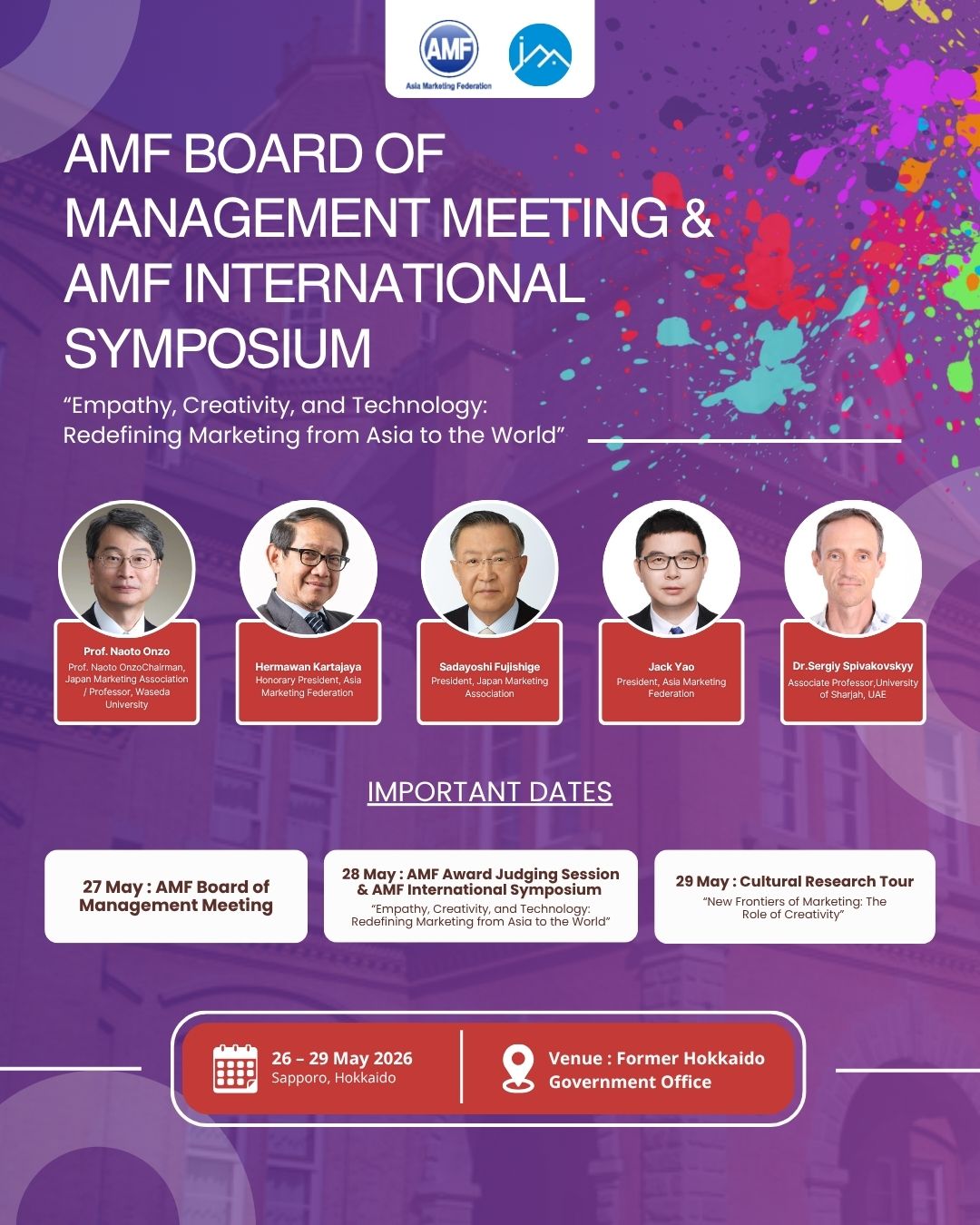
AMF
Board of Management MEETING 2026
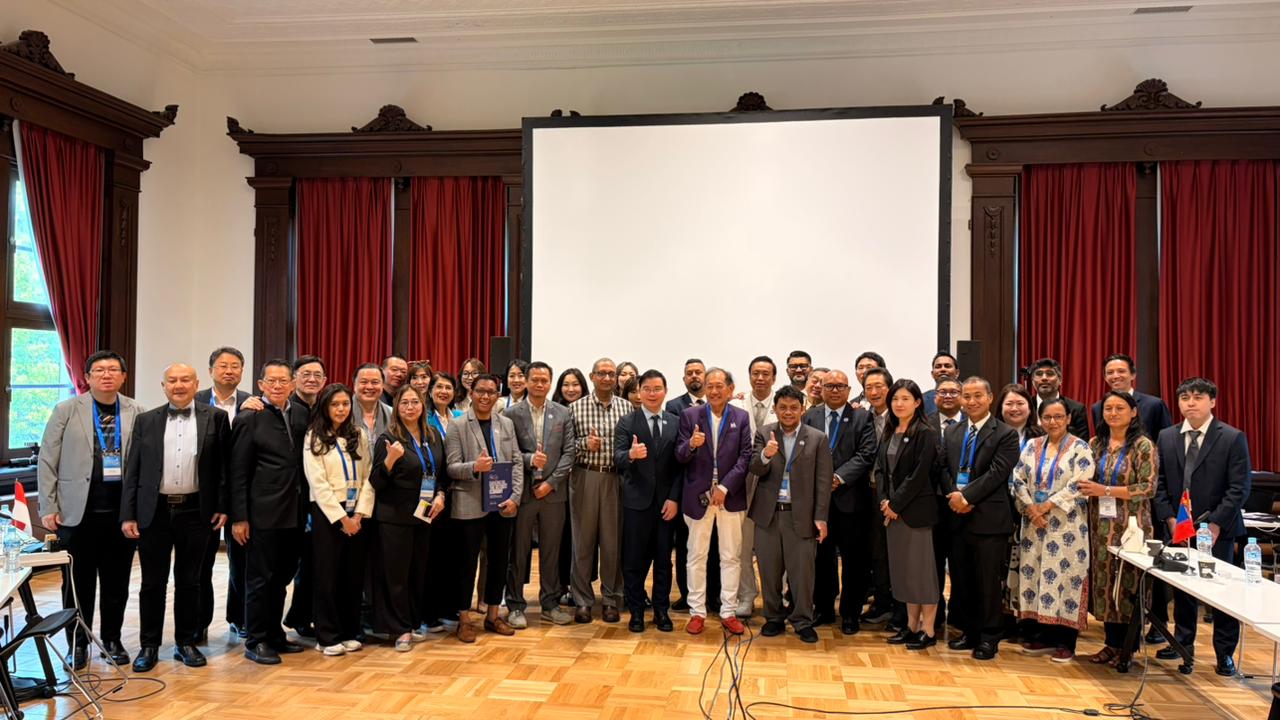
AMF Board of Management Meeting 2026 - Sapporo, Japan
AMF and Japan Marketing Association (JMA) successfully convened
AMF Board of Management Meeting in Sapporo, Hokkaido, Japan, on 27 May 2026.
The meeting also marked the inaugural participation of the Marketing Institute of Myanmar Academy (MIMA) as AMF’s newest member.
The Launch of
World Marketing Council
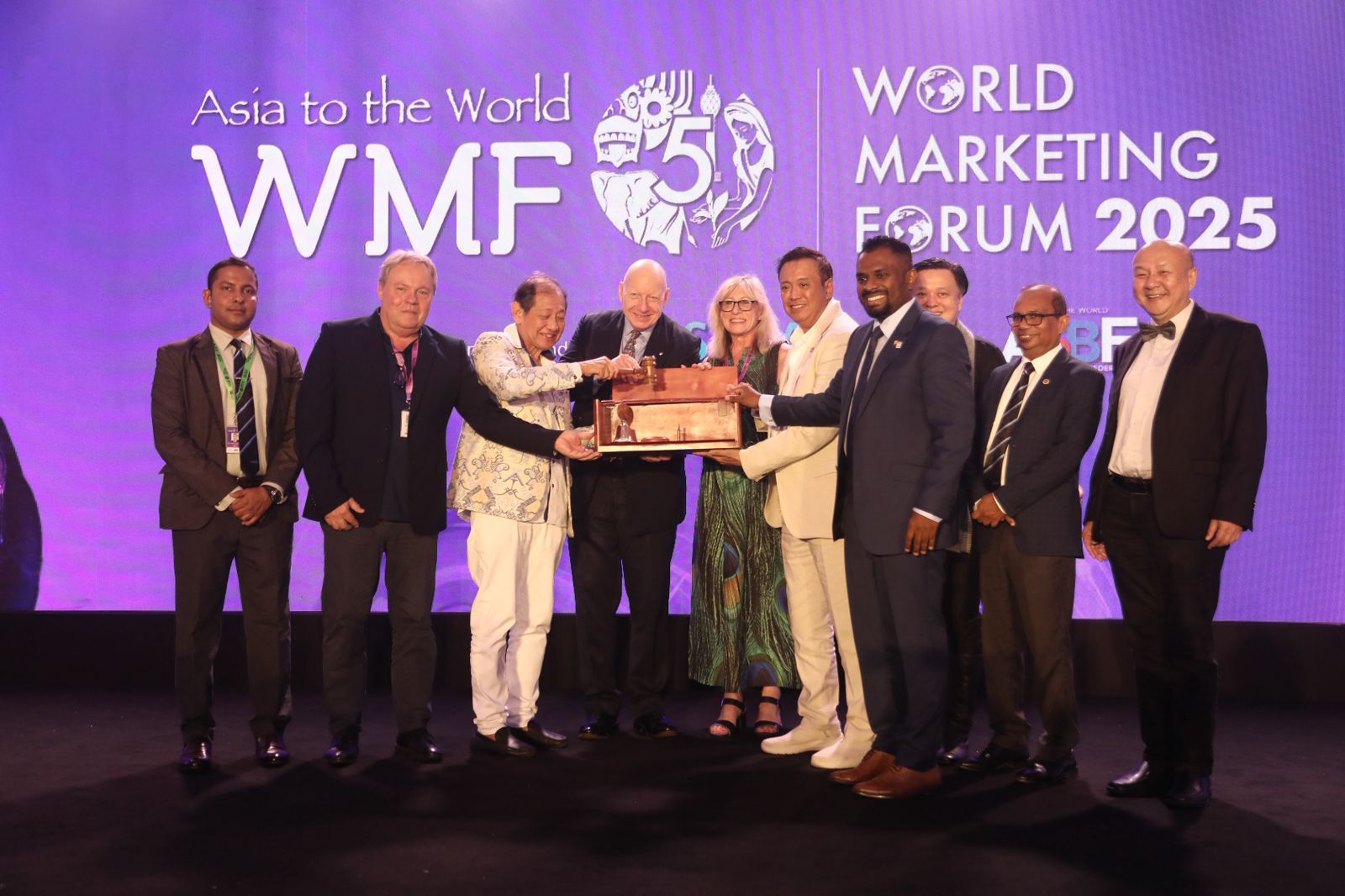
13th November 2025 in Colombo, Sri Lanka
The launch of the World Marketing Council marks a historic collaboration between the Asia Marketing Federation, European Marketing Confederation and African Marketing Confederations uniting global marketing leaders to drive innovation, inclusivity, and sustainable growth worldwide.
Top 10 Trends
Of Tech & Marketing
In Asia 2026
01. Hyper-Personalisation Across Touchpoints
Brands will increasingly deliver highly personalised content, offers, and experiences across every customer touchpoint. Leveraging data on behaviours, preferences, and past interactions, marketers can tailor messaging and recommendations to individual segments, creating relevant and timely experiences. Hyper-personalisation strengthens engagement, builds loyalty, and drives conversions, ensuring each interaction feels meaningful while enhancing overall customer satisfaction and long-term brand affinity.
02. Healthy Meets Convenient: The Rise of Smart Food Choices
For marketers, healthy yet convenient food demand is accelerating. Consumers seek nutritious options that fit fast paced lives. Winning brands simplify health through ready to eat formats, functional benefits, and clear messaging. Convenience, transparency, and taste drive adoption and loyalty.
03. Short-Form Video and Livestream Shopping As The Primary Engagement Channel Driving Purchases
Short-form videos on TikTok, Instagram Reels, and YouTube Shorts will dominate engagement, particularly among younger audiences. Snackable content combined with livestream functionality will act as interactive storefronts, accelerating live shopping adoption. This enables real-time product discovery and purchases, allowing brands to connect, engage, and convert consumers instantly on digital channels.
04. Creator Economy & Media-Influencer Dominance
There will be more brand collaborations with micro-influencers and creators who have highly engaged niche communities. Authenticity, co-creation, and community relevance will outperform traditional celebrity endorsements or scripted campaigns. Leveraging these trusted voices allows brands to foster deeper connections, enhance credibility, and drive engagement, creating meaningful interactions that resonate with target audiences and support long-term loyalty.
05. Purpose Driven Marketing Backed By Visible Proof
Consumer preferences will lean toward brands that demonstrate sustainability
through tangible actions rather than broad claims. Visible proof such as ecofriendly packaging, product durability, affordability, wellness benefits, and measurable social impact will drive trust and loyalty. In 2026, marketers should focus on communicating clear, authentic evidence of purpose, linking initiatives directly to everyday consumer benefits to strengthen credibility and foster meaningful, long-term brand relationships.
06. Adapting Video Content Automatically For Multilingual Audiences
Online videos are increasingly adapting to each viewer’s language through AI dubbing, voice cloning, and real time translation. A single video can now scale across markets without reshoots while preserving natural tone and accurate lip synchronisation. This unlocks faster global reach and more
inclusive communication. Marketers should design video strategies around
language flexibility, supported by reliable AI localisation tools.
07. Gen Z Goes Viral :
How Co-Creation Shapes 2026 Marketing
Younger audiences thrive on creating viral content using trending audio, filters, clips, and dance challenges. Marketers can tap into this by providing shareable templates, sounds, or prompts, enabling authentic co-creation, driving virality, and resonating with participatory, creative youth.
08. Bulding Trust Through Internal Brand Advocacy
Influencer marketing based on reach and follower counts is reaching
credibility limits, as audiences increasingly value the trust and authenticity behind a message. As we enter 2026, attention is shifting toward employees, marketers, customers, and local communities. Companies are activating employees as internal brand influencers, delivering product-led, credible messaging while reducing reliance on external creators. Effective internal creators combine product expertise, audience insight, and storytelling skills, turning marketing into authentic “relationship media” that builds trust over time.
09. The Rise Of "AI-Selected Brands"
By 2026, generative AI will fundamentally transform search, shifting consumer behaviour from comparing websites to relying on AI-generated summaries, recommendations, and conversational guidance. Traditional keyword SEO
will give way to Answer Engine Optimisation (AEO) and Generative Engine Optimisation (GEO), where visibility depends on being a trusted source cited by AI rather than ranked in links. Consumers increasingly use AI to explore ideas, plan, and compare products, making search bars creative,
interactive canvases. Brands must provide clear, credible, and human-centred content structured with FAQs, schema, and strong topical authority
so AI can accurately extract, summarise, and recommend it.

10. Generative Artificial Intelligence
The ability to produce totally new product and new knowledge by using data from deep machine learning and artificial intelligence journey is known as ...
10. Supercharging Sales with AI Prospecting
AI cold calling is reshaping pipeline generation at scale. AI powered voice
agents identify ideal prospects, personalise conversations with natural
language, and deliver credible local accents. Compared to traditional cold
calling, AI enables high volume outreach with consistent quality and rapid optimisation. This allows sales teams to focus on closing, while marketing and sales collaborate on compliant, value driven scripts and precise audience segmentation.
Our Recent
Activities
AMF in collaboration with EMC and AFC, marked a significant milestone with the official launch of the World Marketing Council in Colombo, Sri Lanka, further strengthening global collaboration among marketing institutions.
The landmark event also witnessed the launch of The 5th AMF Journal, reaffirming AMF’s commitment to advancing marketing thought leadership and academic–industry exchange across Asia.
In addition, AMF hosted its annual awards ceremony, presenting the prestigious AMF Award – AMEA (Asia Marketing Excellence Award) and the YWN (Youth, Women, Netizen) Award, recognizing outstanding achievements, innovation, and leadership within the Asian marketing community.
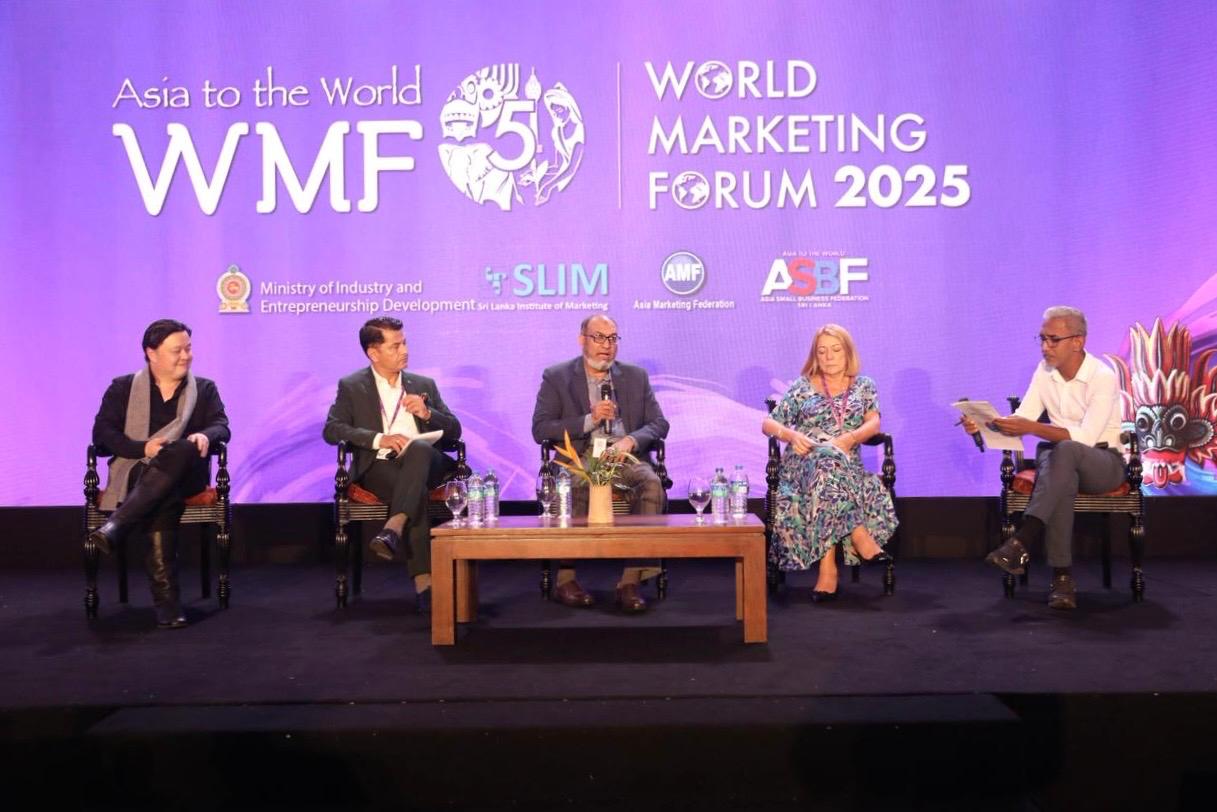
World Marketing Forum 2025
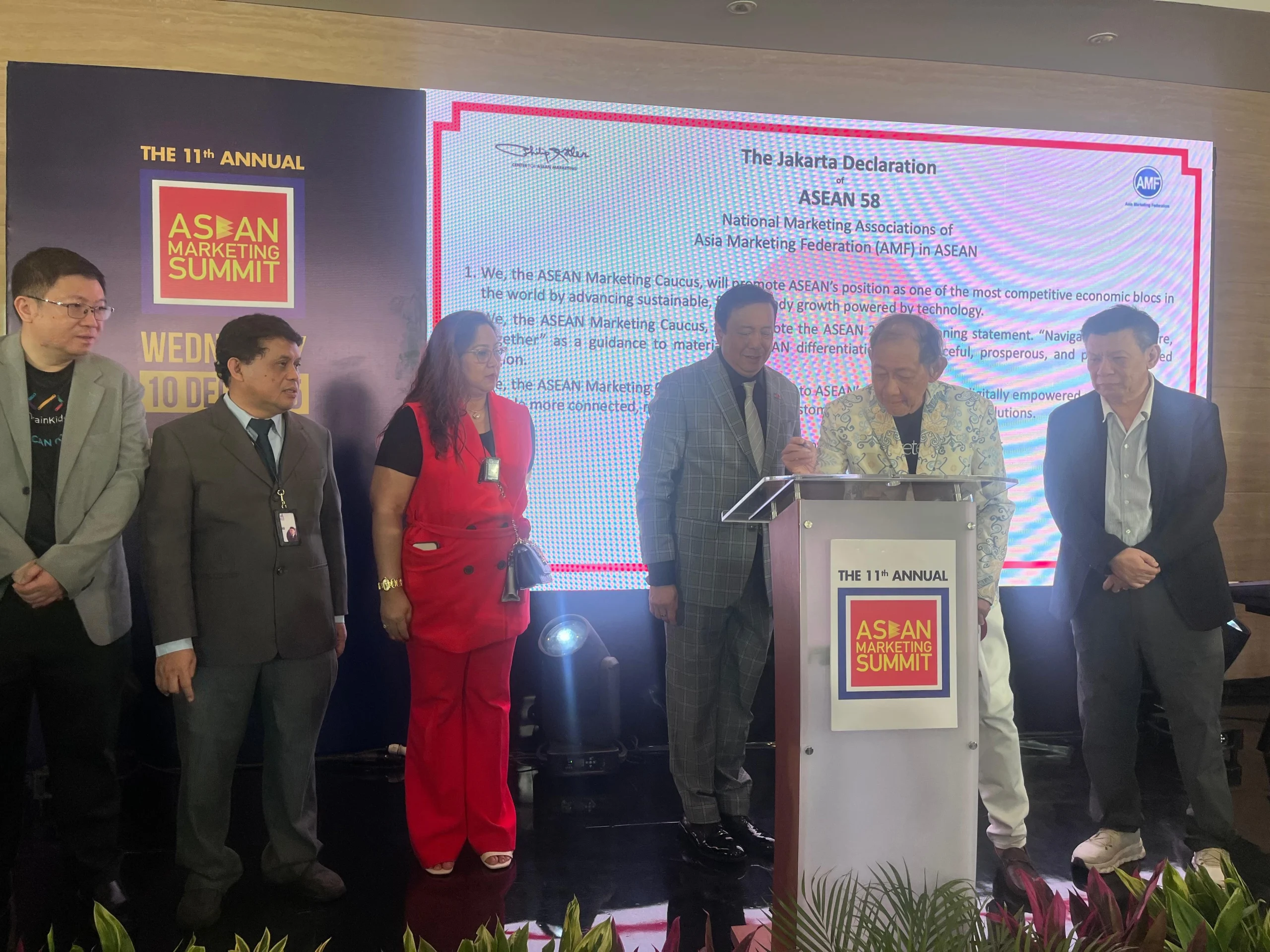
ASEAN Caucus Declaration 2025
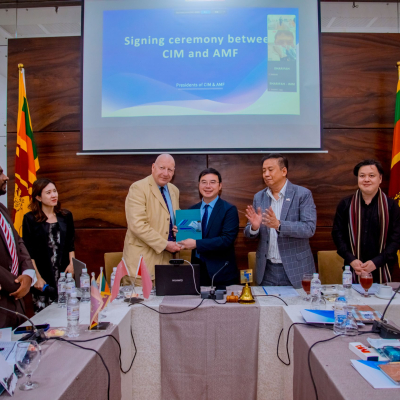
AMF Signed MOU with The Chartered Insitite of Marketing

AMF Signed MoU with New Zealand Marketing Association

AMF Signed MOU WITH African Marketing Confederation
We Love
What We Do
Be part of the AMF community and together as marketers make significant contributions to the advancement of marketing in Asia.